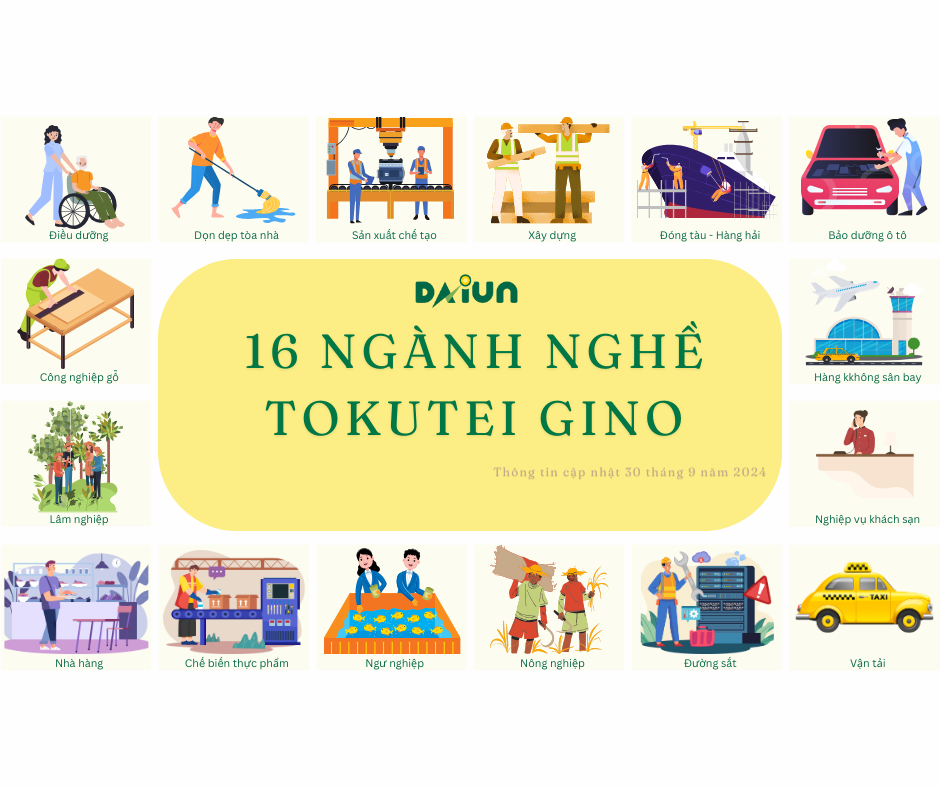
Tại Nhật Bản.jpg)
Overview of the Specified Skilled Worker Visa in the Nursing Care Field in Japan
I. General Introduction to the Specified Skilled Worker Visa
The Specified Skilled Worker visa (特定技能 or Tokutei Gino) is a visa category established by the Japanese government to attract foreign workers with specific skills to work in Japan. This visa was introduced to address labor shortages in various industries, particularly in nursing care. The visa is divided into two types: Tokutei Gino Type 1 and Tokutei Gino Type 2, each with unique requirements and eligibility criteria across different fields.
-
Tokutei Gino Type 1: This visa allows skilled workers to work in 16 industries, including nursing care (介護). To qualify, workers must demonstrate their skills through a series of exams assessing professional expertise and Japanese language proficiency. Type 1 visas are valid for up to 5 years but do not allow family sponsorship.
-
Tokutei Gino Type 2: This visa requires higher skills and experience and currently applies to only 11 industries, excluding nursing care.
II. Nursing Care (介護) in Japan
The nursing care sector in Japan is integral to its healthcare and social care systems. As Japan’s population ages rapidly, there is a severe shortage of personnel in this field, creating a strong demand for foreign workers.
%20in%20Japan.jpg)
-
Workforce Demand in Nursing Care: Japan currently lacks hundreds of thousands of workers in the nursing care field. Facilities for elderly care, hospitals, and nursing homes require substantial staffing to support the health and daily living needs of older adults. The Specified Skilled Worker visa in nursing care was thus designed to attract foreign workers with suitable skills to meet this demand.
-
Roles of Nursing Care Workers: Nursing care workers in Japan not only provide health support but also assist in various aspects of daily life for the elderly, such as:
- Helping with meals, hygiene, and mobility
- Managing medications and assisting with basic medical treatments
- Monitoring patients' daily health
- Communicating and working with elderly individuals, including those with specific medical conditions
III. Requirements for the Specified Skilled Worker Visa in Nursing Care
-
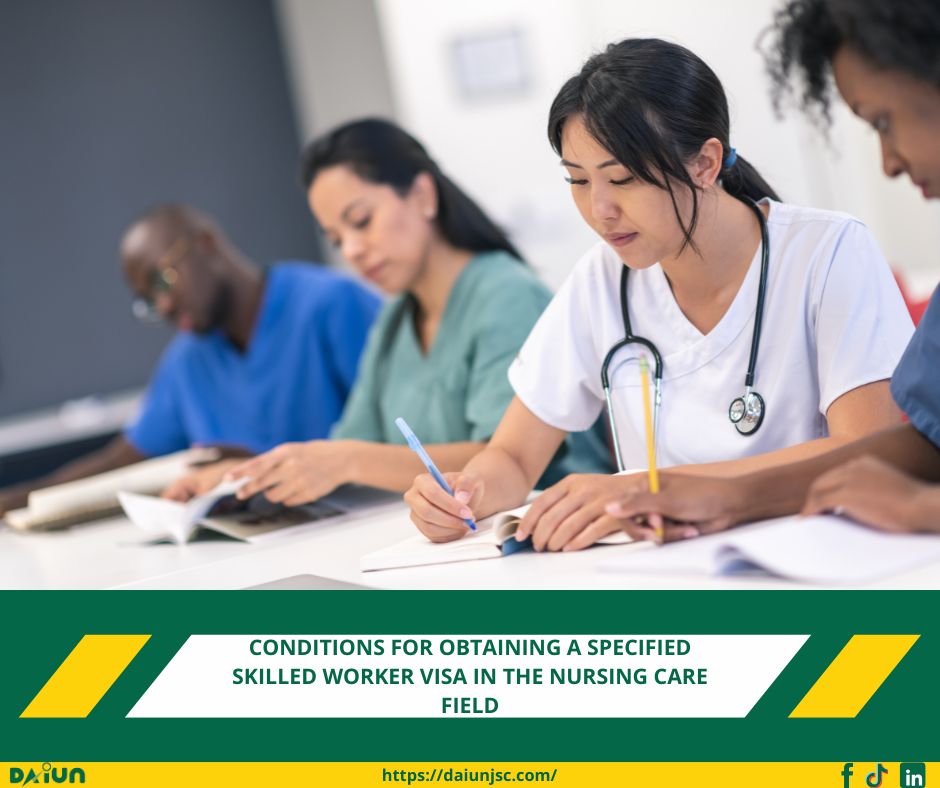
Professional Skill Requirements: To be granted a Specified Skilled Worker visa in the nursing care field, candidates must pass the Nursing Care Skills Evaluation Test (介護技能評価試験), which assesses essential nursing care skills, from care routines to supporting the elderly and patients in daily life.
-
Japanese Language Proficiency Requirements: In addition to professional skills, Japanese language proficiency is crucial. Candidates must pass the Nursing Care Japanese Language Evaluation Test (介護日本語評価試験) or have a JLPT N4 certificate or higher. This requirement ensures that workers can communicate effectively and understand job requirements in Japanese healthcare settings.
IV. Nursing Care Skills Evaluation Examinations
To obtain the Specified Skilled Worker visa in nursing care, candidates must pass two exams: the Nursing Care Skills Evaluation Test and the Nursing Care Japanese Language Evaluation Test. These exams assess the practical skills and language abilities necessary for work in the field.
-
Nursing Care Skills Evaluation Test (介護技能評価試験):
- Content: This test evaluates core skills in elderly care work, including hygiene support, meal assistance, mobility support, and basic health management for the elderly.
- Structure: The test includes both theoretical and practical sections, where candidates must demonstrate their ability to apply nursing care skills to real-life scenarios.
-
Nursing Care Japanese Language Evaluation Test (介護日本語評価試験):
- Content: This test assesses Japanese communication skills relevant to the nursing care field, including interaction with elderly patients and colleagues in daily care situations.
- Proficiency Requirement: Candidates must have Japanese language skills at JLPT N4 or equivalent, enabling them to understand and use specific vocabulary and nursing care terminology.
V. Rights and Obligations with the Specified Skilled Worker Visa in Nursing Care
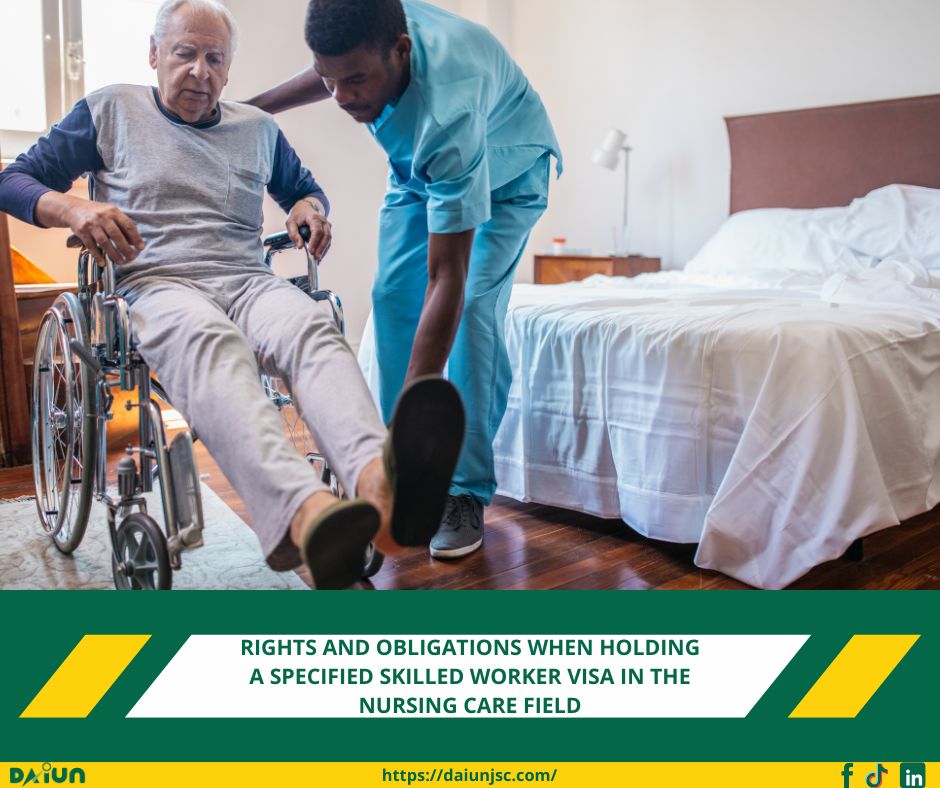
Holding a Specified Skilled Worker visa in nursing care grants workers several rights:
- Salary and Benefits: Workers under this visa are entitled to wages and benefits equivalent to Japanese employees in the same industry.
- Work Duration: Type 1 visas are valid for a maximum of 5 years, allowing continuous employment in the nursing care field throughout this period.
- Promotion Opportunities: Workers may advance their skills and eventually qualify for the Type 2 visa, opening opportunities for long-term residency and family sponsorship.
However, visa holders are also obligated to comply with Japanese labor regulations, including adherence to workplace rules, visa renewal requirements, and labor laws.
VI. Application Process for the Specified Skilled Worker Visa in Nursing Care
The general application process involves these steps:
- Registering and Taking the Skills and Japanese Language Tests: Candidates must register for and pass the two mandatory exams to meet eligibility requirements.
- Finding Suitable Employment: After passing the exams, candidates can search for nursing care jobs in Japan, either through international recruitment organizations or foreign labor support programs.
- Applying for a Visa and Related Documents: After securing employment, workers must complete the visa application process, which includes submitting documents verifying qualifications, exam certificates, and employment contracts.
- Relocation to Japan (If applying as a new Tokutei Gino worker and have not yet been to Japan): Once the visa is granted, candidates can relocate to Japan and begin working in the nursing care sector.
VII. Conclusion
The Specified Skilled Worker visa in nursing care presents a valuable opportunity for foreign workers interested in contributing to Japan’s healthcare environment. Given the high demand for labor in nursing care, this pathway allows foreign workers not only to develop a career but also to play a significant role in enhancing the quality of care in Japan. However, to take advantage of this opportunity, candidates must thoroughly prepare their professional skills and Japanese language abilities while adhering to Japan’s labor and visa regulations.
Recent Posts

Autumn Picnic to View Red Leaves: A Memorable Team Building Event at Toneri Park, Adachi-ku, Tokyo

Vietnamese Teachers' Day: Honoring Silent Devotion

Japan Tightens Bicycle Safety Regulations: A Step Forward in Traffic Management

Overview of the Building Cleaning Specific Skills Visa